
Why Do Homeowners Pay Twice For Electricity?
Generate electricity during the day. Buy it back at night. Here’s why it happens and how battery storage can help you make better use of your solar energy.
If your home has solar panels, you might assume you’re using all the electricity they produce. In reality, many UK homeowners export excess electricity to the National Grid during the day, only to buy electricity back later that evening.
Understanding why this happens is the first step towards improving your home’s energy efficiency and reducing your reliance on the grid.
Explore Battery Storage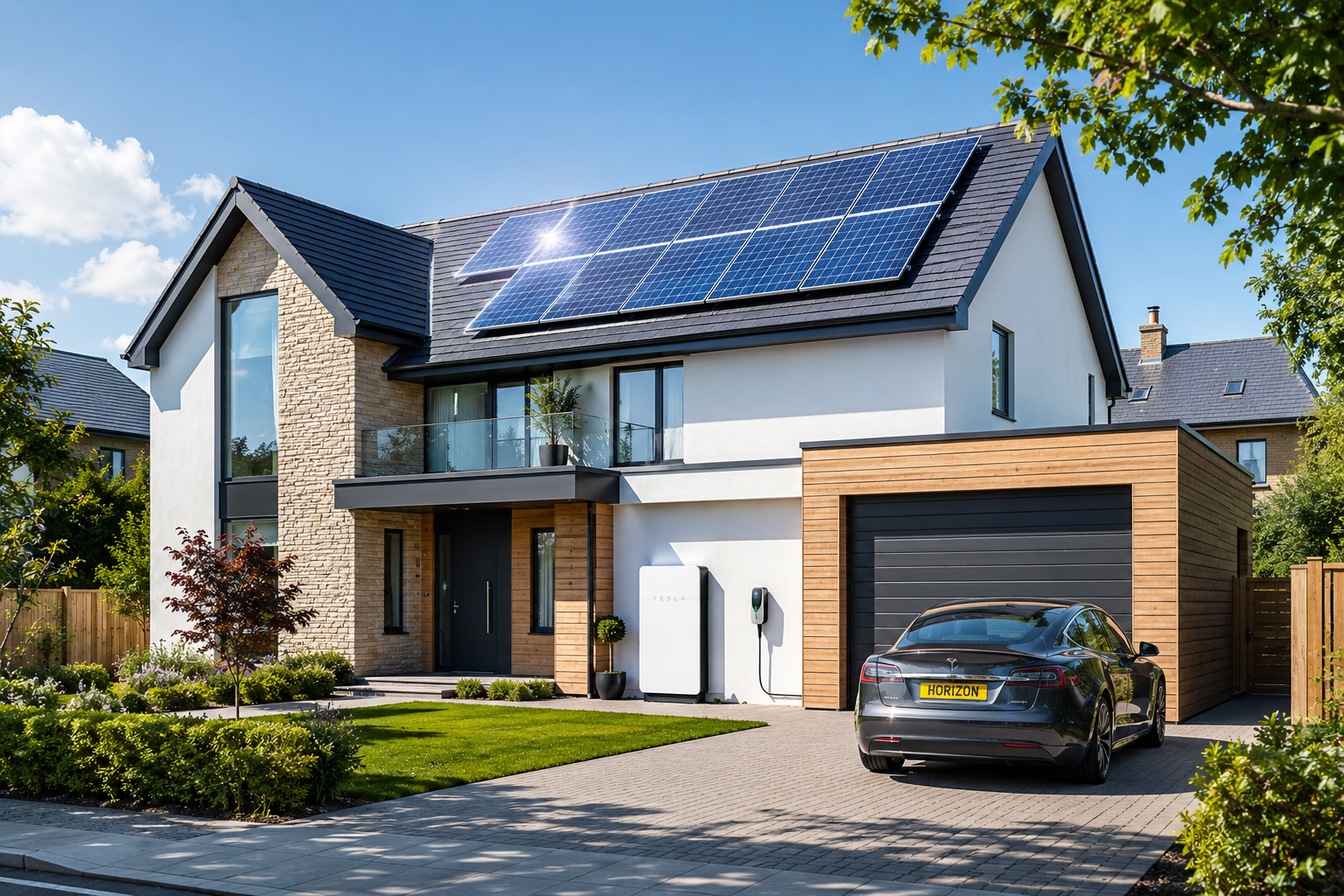
How Solar Panels Generate Electricity
Solar panels convert sunlight into electricity throughout the day. Your home uses this renewable electricity first, powering everything from lighting and kitchen appliances to televisions, heat pumps and electric vehicle chargers.
When you’re using electricity as it’s being generated, you reduce the amount you need to import from your energy supplier.
On bright days, many solar PV systems generate more electricity than the average household can use. That creates surplus energy, and without somewhere to store it, the excess electricity leaves your home.
Where Does the Extra Electricity Go?
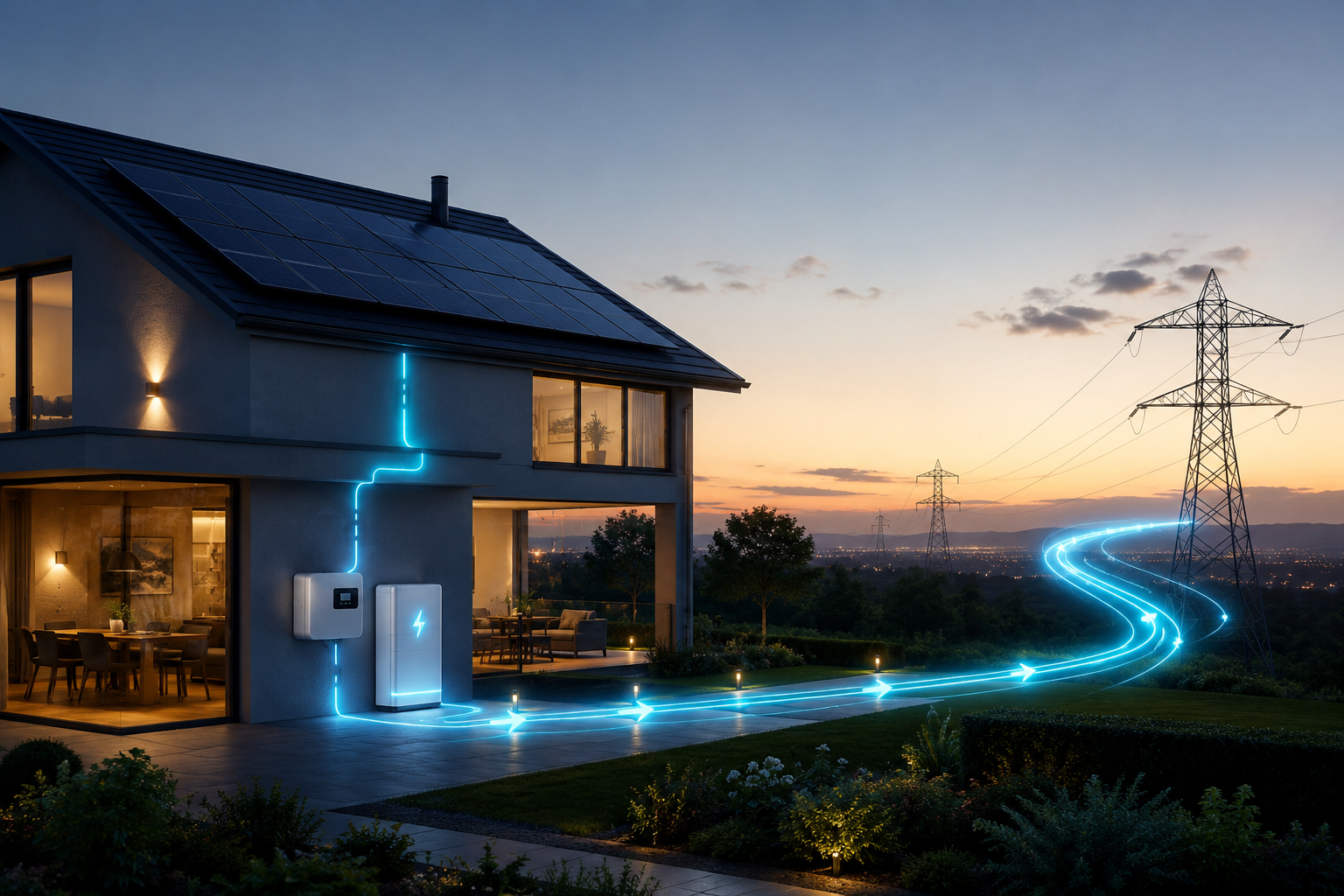
Without a home battery, surplus electricity is automatically exported to the National Grid.
Many homeowners receive payments through the Smart Export Guarantee (SEG), which rewards households for exporting renewable electricity. While this can provide additional income, export payments are often lower than the cost of buying electricity back later.
Once your electricity has been exported, it is no longer available for your own home.
Explore Battery Storage
Why You Buy Electricity Back Later
As the sun goes down, solar panels stop producing electricity, but your home continues to use energy.
Lighting, cooking, entertainment systems, heating and charging devices all require electricity throughout the evening and overnight.
Without stored solar energy, your home begins importing electricity from the grid again. This is why many households effectively export electricity during the day and then purchase it back only a few hours later.
How Battery Storage Changes the Equation
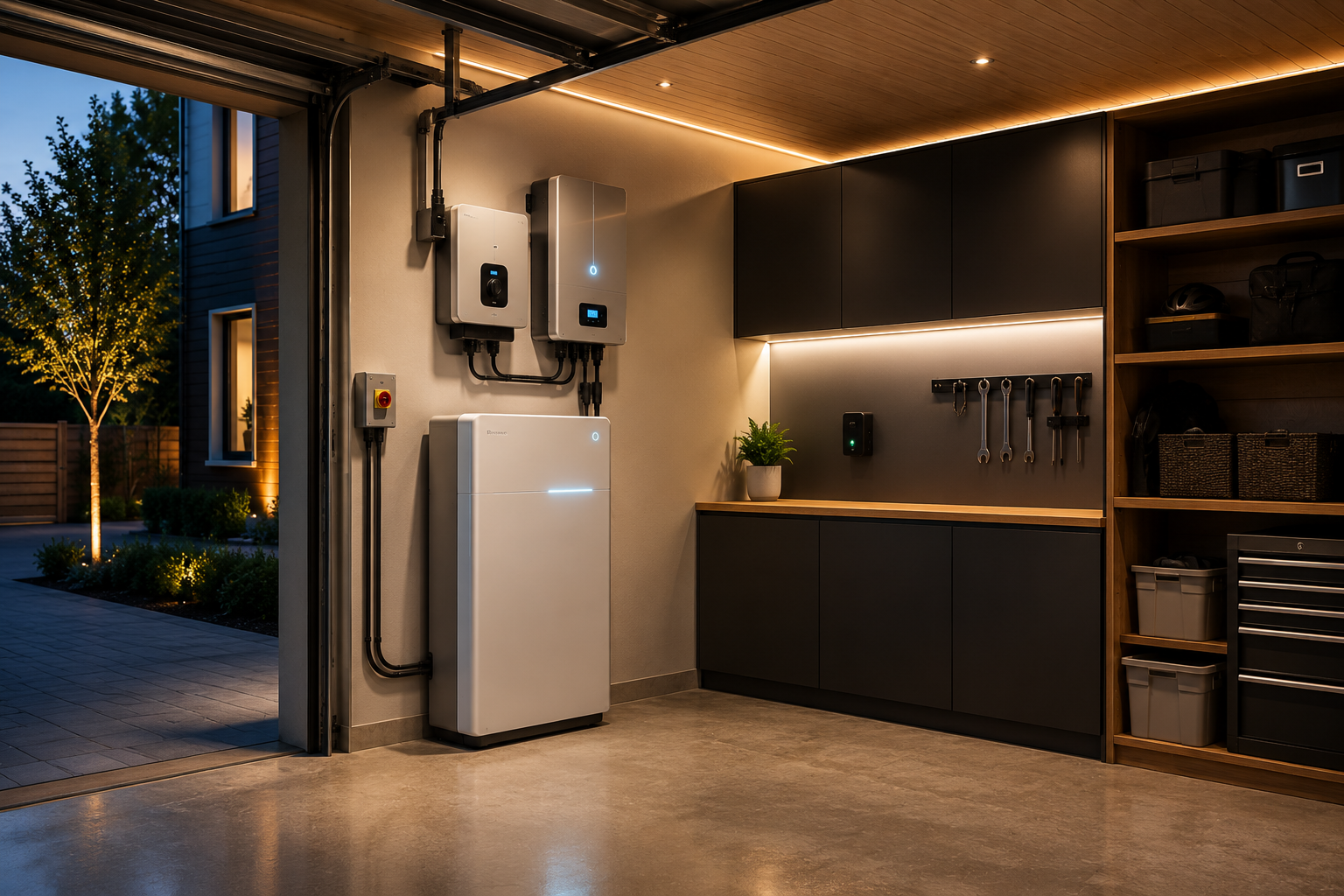
A home battery stores surplus electricity generated during the day instead of sending it straight to the grid.
When your solar panels stop producing electricity, your home can use the stored energy first before importing electricity from your supplier.
For many households, this means greater energy independence, lower electricity bills and better use of the renewable energy they’ve already generated.
Battery storage can also provide peace of mind during power cuts when installed with compatible backup functionality.
Explore Battery StorageFrequently Asked Questions
Why do solar panel owners still receive electricity bills?
Because most homes use electricity after sunset. Without battery storage, that electricity needs to be imported from the National Grid.
Do I get paid for exporting electricity?
Many UK energy suppliers offer payments through the Smart Export Guarantee (SEG), although export rates are usually lower than the price of buying electricity from the grid.
Can battery storage eliminate my electricity bill?
Not completely. However, it can significantly reduce the amount of electricity you need to buy by storing excess solar energy for later use.
Is battery storage worth it?
For many households, battery storage improves self-consumption, reduces reliance on the grid and helps maximise the value of a solar PV system.
Ready to Make Better Use of Your Solar Energy?
Battery storage helps you keep more of the electricity your home generates, reducing your reliance on the grid and helping you make better use of renewable energy.
Explore Battery Storage